An exclusive gaming industry community targeted
to, and designed for Professionals, Businesses
and Students in the sectors and industries
of Gaming, New Media and the Web, all closely
related with it's Business and Industry.
A Rich content driven service including articles,
contributed discussion, news, reviews, networking, downloads,
and debate.
We strive to cater for cultural influencers,
technology decision makers, early adopters and business leaders in the gaming industry.
A medium to share your or contribute your ideas,
experiences, questions and point of view or network
with other colleagues here at iVirtua Community.
IELTS certificate for sale
IELTS certificate for sale: The arena is complete with opportunities and new methods of doing matters. You can determine these days to shop for an IELTS certificate online to keep away from the stress of examinations and other stressors. World IELTS helpers have helped millions of people to buy registered IELTS certificates or IELTS certificates without exams. Are you one of those human beings seeking out which to shop for real IELTS certificates online, properly your seek has landed you on the proper page. Go with the satisfactory and buy an IELTS certificate without examination. Click here to book now to get started out.
The British Council and IDP don’t care approximately the variety of instances you’ve got seemed simply due to the fact you wish to attain your desired band rankings. It isn’t your fault to be a non -English person. We encourage all Asians to apply this quickest way to acquire their favored band scores. It’s without an exam is the brand new fashion and the easiest method used by thousands and thousands of humans to comfy their favored band ratings without problems. Most bands 8. zero, 8.5, and 9. zero achievers, surpassed via us to obtain the one’s rankings. Many gained inform you how they carried out their ratings, due to the fact those techniques are all exclusive. We’ve got helped millions throughout the globe, and we maintain assisting as many as we can.
Email:info@globalieltsunit.com
WhatsApp:+1 (469) 430-8634
Website: https://www.globalieltsunit.com IELTS certificateThe IELTS certificate is an essential step in your training! International English language checking out the device, is a take a look for people who are going to stay in English-speakme international locations due to immigration, education, or practical schooling. The examination allows figuring out the extent of English of someone for whom it’s now not the local language. IELTS certificate for sale
You need an IELTS certificate in case you plan to immigrate to Australia, Canada, or New Zealand, to have a look at the higher educational establishments of these countries, in addition to Irish, British or American universities. In the global, the numbers of establishments that apprehend the results of IELTS maintain to boom.
The IELTS certificate can be valid for two years. While this period is over you’ll want to confirm the level of proficiency again. But the so-referred to as Cambridge tests group is known for its “permanent” length. At the same time, these assessments haven’t any limitations on the scope of application, and the schools which receive the certificate of CPE can take note of the date when it became acquired. Therefore, for his or her actual use the “perpetuity” is not an advantage.
What is IELTS – IELTS certificate for saleIELTS is an English language test for taking a look at, migration or paintings. Over 3 million humans take our test every year. IELTS is general by means of extra than eleven,000 employers, universities, colleges, and immigration bodies around the arena.
The international English language testing gadget (IELTS) is designed that will help you paint, have a look at or migrate to a country in which English is the native language. This includes international locations inclusive of Australia, Canada, New Zealand, the united kingdom, and America.
Your ability to listen, read, write and communicate in English will be assessed at some point during the check. IELTS is graded on a scale of 1-nine. IELTS is together owned by way of the British council, IDP: IELTS Australia, and Cambridge English.
Why take IELTS?In case you are seeking to paint, live or take a look at in English-speakme united states of America, then you definitely should be capable of revealing a high level of English language potential.
English is the third most spoken language in the international, with 379 million speakers global.
Being able to talk within the local language of the u. S . Your desire to work or study in, has a wide range of advantages. It is also essential for task possibilities in addition to integration into the network. IELTS certificate for sale
IELTS is the most popular take look at for those trying to migrate to Australia, Canada, New Zealand, and the UK. It’s miles globally recognized with the aid of extra than eleven,000 employers, universities, schools, and immigration bodies 3, and four hundred establishments within the u.s.a.
What IELTS score do I need?The higher your may be rating for your IELTS, reflects the better your know-how and capacity to talk in English. Every immigration body, college, place of job, or group may have precise IELTS rating requirements. The score you want will rely on what you are trying to do within the u. S ., i.e work or have a look at.
How IELTS is evolvedIELTS is developed to provide a fair and accurate assessment of English language talent.
Check questions are evolved through language experts from Australia, Canada, New Zealand, the UK, and the united states. The test covers 4 sections: listening, studying, writing, and speaking.
IELTS takes a look at content material and displays normal conditions. It is independent and truthful to all check-takers from all backgrounds.
IELTS result assertion – IELTS certificate for saleThe IELTS trendy end result is simple to gain. But, the assertion of the effects relies upon the take look at the kind and format of the IELTS examination you have attempted.
You’ll get the computer-brought outcomes online within three-five days after the take a look at the date.
You will get the paper-based IELTS results online from 12 am (GMT) on the thirteenth day after the IELTS examination date.
Candidates can get their IELTS life capabilities effects (a1, a2, or b1 tests) online from 12 am (GMT) on the 7th day after their IELTS exam date. IELTS certificate for sale
The IELTS trying out middle will dispatch the TRF to candidates’ postal addresses. It is going to be published three-5 days after the test date within the case of laptop-primarily based IELTS and thirteen days after the check date if applicants have regarded the paper-primarily based IELTS take a look at it.
How is IELTS certification distinctive from TESOL, TEFL, CELTA, and so forth?As we stated earlier, IELTS stands for worldwide English language trying out the system. It’s basically designed to check the English abilities of a non-local English audio system that wishes to take a look at, live, or paintings in the English-speaking USA. Upon finishing touch of the test, you get hold of a take-a-look-at record shape (which a few people may additionally refer to as a certificate), with the intention to show your English stage.
Tesol, TEFL, and CELTA are acronyms for unique packages for folks who need to train in English as an overseas language. Tesol, for instance, stands for coaching English to audio systems of other languages. Upon completing one of these programs, individuals usually acquire a certificate stating that they are eligible to educate English to non-local English speakers. IELTS certificate for sale
Email:info@globalieltsunit.com
WhatsApp:+1 (469) 430-8634
Website: https://www.globalieltsunit.com
Games and related industries professionals (games developers,publishers and industry experts/ISPs/content agglomerators/set top boxmanufacturers...):if you canspare a few minutes, your opinion on an EU-funded digital gamingplatform project would be very much appreciated. Our research team inthe Department of Psychology at Goldsmiths, University of London, iscurrently working on an EU-funded digital gaming platform projectcalled Games@Large. As part of an industry consultation process we haveset up a short online survey. Any help in completing the survey and/or getting it out to other industry professionals would be great.
The survey (and links to project brochure) is at:
UK videogame industry leaders have demanded greater ties betweenbusiness and academia to ensure that Britain's games developers remainglobally competitive. But will any of them step forward to foster therelationship?
At games industry conference the Westminster Media Forum, held inLondon this week, Mary Matthews, Strategy and Business DevelopmentDirector at game developer Blitz, said that ineffective training isholding the industry back.
“We can’t do what we want to do because we can’t find the right people,” she said.
Yet, acording to Kate O’Connor, Executive Director of Policy andDevelopment at Skillset, an industry body for skills and training, UKuniversities already offer 80 videogame-related degree courses. Nonehave any industry recognition, however.
Paul Harris, Professor of Screen Media at the University of Abertay,Dundee, agreed that accreditation by game design firms is crucial. Hesaid it is the best way for universities to ensure that students’skills match firms’ requirements.
Matthews also called for a similar frequent refreshment of the curriculum.
Matthews has other ideas too, such as recruiting potential gamedesigners from the age of 14. In her view, this would help kidsestablish much earlier a link between enjoying games and developingthem, thus steering more designers into the industry.
However, no one appears willing to take responsibility for theproposals. Instead, both industry and academia are hoping thegovernment will do the job for them.
Margaret Hodge, Minister for Culture, Creative Industries andTourism, said at the conference: “The games industry must do more toencourage students to choose the right qualifications [for videogamedesign], such as maths and physics.”
The government, she said, also has plans in the pipeline to createof centres of excellence for videogame development where gaming brainscould unite to develop the next smash hit.
Yahoo! hassigned up with in-game ad firm Double Fusion and Nolan Bushnell'sNeoEdge to help deliver free ad-supported, downloadable games.
Yahoo!Games' website will feature over 400 ad-supported downloadable gamesfrom "top casual games publishers" by the end of the year, the companysaid Thursday.
Double Fusion and NeoEdge will sell and integratevideo ads into Yahoo! Games titles. Double Fusion will implement itsfusion.runtime tech, while NeoEdge is offering its NeoARM ad-enablingsolution, along with the NeoAds ad network.
Game makers on board for today's launch include Big Fish Games, MumboJumbo, PopCap, TellTale Games, I-Play and several others.
founder of the Virtual Policy Networkthink tank, Ren Reynolds has announced a virtual worlds-orientedconference happening in two weeks time, just before the busy DevelopConference takes off in Brighton. It's called Virtual Policy 08 and is co-sponsored by BERR, the Department for Business Enterprise and Regulatory Reform (former DTI). Taking as its starting points four key legal and regulatory issues,this event aims to bring together practitioners, policy makers andpublic servants for two days to grapple with Intellectual PropertyRights, Financial Transaction, Children Online and GovernanceFrameworks.
From Ren's post on Terra Nova,
What interests me about this event is that much of the debate aboutvirtual worlds that one sees in academia, at least, has been driven bythe US. This means that North American issues, rhetoric andsensibilities have been given primacy. Hosting an event in the UKshould help to flush out those areas where Europeans either don't thinkan issue is important or have a very different framing of it.
Virtual Policy 08 takes place in London on 22nd & 23rd July. More information is here.
Just being able to play games is only the beginning. If you're goingto call yourself a proper gamer (as opposed to a casual pretender)there are a few requisite skills that you must master first. 50 skills,in fact. And they're all right here...
1. Give a game a review score without ever actually playing the game A cursory glance from 20 paces of a grainy postage stamp-sized superlo-res scanned-in screenshot pinned to the ass-feathers of a headlesschicken in a sandstorm should be all you need to confidently attributean authoritative and infallible review score to any game. It's howprofessional reviewers have been doing it for years.
2. Be able to spot whether a game is running in 720p Just by looking at it.
3. Survive with only four hours sleep (max) a night We all abide by the 'one more go' mantra. It demands that we are strong in the face of severe sleep deprivation.
4. Play Wii without using the wrist strap Or, master the art of gripping. Even newborn babies can do it.
5. Attack the weak point for massive damage Look for the big red/yellow/orange thing. It's normally located on anenemy's back/ass/forehead. If a sustained assault yields unsatisfactoryresults, try attacking it with the last weapon you picked up. Thatnormally works a treat.
6. Be an expert in the work of one particular developer besides Miyamoto Support the people that make the games you love. Pick a team. Find ahero. Whether it's an entire studio or just a single creative. Getexcited about the games they make. Know their history and what they'reabout. Hunt out their gameography. Get informed. We're sure Mr Shigstuff won't mind if some of the love gets spread around.
7. Beat a really bastard hard game on any tier of difficulty higher than Normal Real men play on MASOCHIST!
8. Estimate remaining PSP battery life and calculate device's lastability on journey If you've gone to all the trouble of uploading an extensive selectionof softcore pornography to your PSP in advance of a business trip, itcan be hugely upsetting to run out of juice before you've even had achance to make yourself tired in the airplane convenience.
9. Play driving games without 'steering' the controller Unless you're a girl. Then you can't help it.
10. Become unhealthily obsessed with one particular game and play only that game for six months solid Winners don't quit. They become addicts.
11. Instantly recognise any game being played on a TV show or in a movie Computer Space in Jaws, Asteroid Deluxe in The Thing, Galaga in Trains,Planes and Automobiles, Centipede in Never Say Never Again, thesound-fx of Pac-Man in Ferris Bueller's Day Off... plenty more here.
12. Easily spot at least 5 differences between any PS3 and 360 comparison shots, that are invisible to the normal human eye You're looking for things like lighting, texture resolution, draw distance, anything pink or slightly gay, lumps or growths etc.
13. Expertly pick the right game for the right moment You might think your sozzled post-pub friends are having an absoluteparty huddled around your monitor watching you level up in World ofWarcraft. But they're not.
14. Be able to navigate to the 'Invert? Yes/No' option in under 5 seconds
Pause. Controller Options. Invert Yes/No. Unpause.
15. Be fluent in l337 5934k Bµ7 Ð0n'7 b3 4 7w47 4nÐ 3v3r µ$3 17. H3r3'$ 4 h4nÐ¥ 7r4n$£470r, jµ$7 1n (4$3.
16. Instinctively know the location of all controller buttonsand their respective numerical, alphabetical or symbol-baseddenominations When playing, a real gamer never has to look at the controller. Unless it's to check that it's not on fire.
17. Perfectly repackage console/PC snugly back in its box, complete with Styrofoam and cable ties Put those ninja-honed Tetris skills to good use.
18. Make in-game moral choices quickly and without flinching Stop being such a lightweight and kill the Little Sister already. We'repretty sure God doesn't take make-believe evil into account whendeciding who gets locked out.
19. Have a selection of "I only lost because..." excuses prepared and rehearsed in the event of defeat Here's a few for free: "...I couldn't take my eyes off your lap"; ...Ihurt my fingers when your mum sat on them"; "...Satan told me to";"...I was a victim of sexism" and so on.
20. Own non-gaming friends at absolutely anything You've never played the game before. The pad's missing buttons. You'vegot amoebic dysentery and you can feel a hairy-ass spider crawlingacross your face. So what? When you're up against a newbie there is noexcuse for anything less than comprehensive ownership.
21. Perform tea-bagging like a pro Don't bang away like a demented pneumatic penis. Get rhythm. Tea-bagging is an art - as our own educational video reminds us.
22. Immediately know what to dump when your inventory is full Don't know what to drop after the Goblin's Cleaver of Apathy made youover encumbumbered? Stop being a massive tool and just relinquish someof the unused crap you've been pointlessly clinging on to for the last30 hours.
23. Engage in the 'Are games art?' debate without sounding like a pretentious twat or a moronic dumbass Find the middle-ground between this:
"I think you'll actually find that videogames are a post-modernexpression of individualism while simultaneously collectivising itsdigital form and manifesting as abstract interactive entertainment."
And this:
"Art is for pussies. I just want to kill make-believe people."
24. Always spot the 'hidden area' Remember: nothing screams "HIDDEN AREA!" louder than a cracked wall.
25. Gather enough tech speak to make it sound like you know how to make games better than developers themselves
"Sure, they might have nailed the anisotropic and bilinearfiltering, but you can unzip me like a banana if the Cartesiancoordinates and phong shading aren't an absolute bucket of wank." Smartsounding development speak makes you superior. This site is a good place to start.
26. Memorise enemy/item spawn points
Want to know how tHE dEfec8or is always smoking your ass withthe rocket launcher? It's because he's all over the longitude andlatitude of those maps, and he's snorting up the coordinates of everyspawn point and he knows exactly what it'll spawn and he knows exactlywhen it'll spawn it. It's called dedication and that's why tHE dEfec8oris a winner.
27. Complete unlocking/defusing mini-games first time, every time Should be like making Einstein recite his five times table.
28. To never be suckered by game store offers pimping crappy games and shitty third party peripherals An Hour of Victory and Turning Point: Fall of Liberty bundle for 40notes with a TatTech controller thrown in for free is not a bargain,it's a piss-take.
29. Be condescending, patronising and impatient when playing with non-gamers Alternatively, feign kindness and offer to show them "how to do it". Once you've got the controller, never give it back.
30. Be shit-faced drunk and still be able to rock at Guitar Hero or other popular party game Preferably be able to keep getting more drunker while playing.
31. Bluff your way through a conversation about a retro game you never actually played Don't ever admit to having not played some geriatric, incontinent pieceof gaming history that some rose-tinted retrosexual is eulogising. Justfudge your way through. It's not hard: "Geoff Spectacles and theSubatomic Android Invaders on the Vic-20? Of course I played it! Thatwas the one with the monochrome 2D graphics and beepy sound effectswasn't it?"
32. Instantly identify enemy types by the sound they make Don't stop with enemies. Utilise your ears as nature intended andrecognise weapons, vehicles, power-ups, score multipliers... anythingat all with the amazing power of hearing.
33. Confidently guess what a developer's secret project/unannounced title is If all else fails, predict Shenmue 3.
34. Passionately champion at least one obscure game that nobody has ever heard of and win it some new fans Ever heard of Warriors of Elysia? It's the long overdue sequel to Bikini Karate Babes. We're sure it's going to be awesome.
35. Get the highest possible rank/medal/award in any tutorial level Tutorial levels are weak and pathetic. An insult to proper gamers,they're a monumental mismatch on the same scale as a bare-knucklesbrawl to the death between Chuck Norris and Barbara Bush.
36. Know which elemental attack will be most effective against an enemy Water>Fire. It's not exactly rocket surgery.
37. Master the art of reloading Don't ever let your gun get caught with its pants down. It's humiliating.
38. To simultaneously perform other important life tasks while playing Multi-tasking is the cornerstone of every real gamers' brain. Youshould be able to eat pizza, guzzle coffee, fill in a jobapplication, build a house of cards AND successfully evade a six-star wanted level in GTA IV all at the same time.
39. Skip every cut-scene and still understand what's going on No matter how convoluted the machinations and exposition, when it boilsdown to it you're basically just trying to beat the baddies.
40. Identify boss battle attack patterns in under 20 seconds Lunge. Lunge. Guard. Burrow into ground/disappear/become temporarilyinvincible. Emerge from ground/reappear/stop being invincible. Chargespecial attack. Release special attack. Expose weak spot in atactically foolish and totally unnecessary manner <Playerstrikes> Repeat until dead.
41. To know everything about the game without ever having to consult instruction manuals Apart from a few semantics and trivialities, once you've read one instruction manual, you've pretty much read them all.
42. Argue effectively in a gaming Internet forum
At the most basic level this entails typing "HAVE YOU ACTUALLYPLAYED THE GAME!?" over and over and over until the foul dealer ofscurrilous mistruths slinks away like the miserable dog that he is.
43. Well developed bladder control You're not going to get to level 70 by taking a piss break every three hours.
44. Condense even the most convoluted control system into easy-to-manage verbal instructions "Basically, move the sticks and press X"
45. Always know the best spots for camping So you can root them out or dig in deep, depending on your mood.
46. Memorise important cheat codes for fast fingered employment at a moments notice If you can't remember Up, Up, Down, Down, Left, Right, Left, Right, B, A then you weren't there.
47. Have at least one game that you are unbeatable at Take the time to master a game. Play it with your eyes closed. Learnevery pattern, every combo, every counter, every weak-spot. But don'tbrag about it. Just casually lure people into your virtual domain. Toywith them. Give them false hope. Maybe even let them win a couple oftimes and say something all humble and wimpy like: "Gee, you really gotme. Well played." Then bring the real noise and let the shuntingcommence. Their humiliation will feel rudely satisfying.
48. Be like Rainman when converting Microsoft/Wii points It's the ultimate geek party trick. If you can calculate that 190,608Microsoft points is $2,381.65 without even flinching then you will get chicks. Believe us. Mental arithmetic makes ladies hot.
49. Read the back-of-box blurb and decipher it into 'What It Actually Means' "State-of-the-art 3D environments and characters" = "We done some graphics". More here.
50. Know when NOT to talk about gaming "Sure, as maps go if you've got a competent team together thenCrossfire can be pretty badass, but Wetworks is off-the-hook whenyou're gunning solo. Oh yeah, sorry to hear about your entire familygetting killed with the bird flu. Must be a real bummer. So... youwanna play some COD?"
Linuxis a hacker’s dream computer operating system. It supports tons oftools and utilities for cracking passwords, scanning networkvulnerabilities, and detecting possible intrusions. I have here acollection of 10 of the best hacking and security software tools forLinux. Please always keep in mind that these tools are not meant toharm, but to protect.
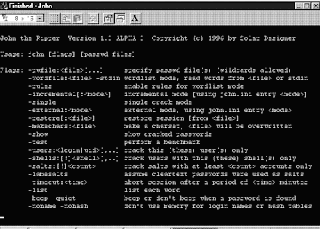
1. John the Ripper
John the Ripperis a free password cracking software tool initially developed for theUNIX operating system. It is one of the most popular passwordtesting/breaking programs as it combines a number of password crackersinto one package, autodetects password hash types, and includes acustomizable cracker. It can be run against various encrypted passwordformats including several crypt password hash types most commonly foundon various Unix flavors (based on DES, MD5, or Blowfish), Kerberos AFS,and Windows NT/2000/XP/2003 LM hash. Additional modules have extendedits ability to include MD4-based password hashes and passwords storedin LDAP, MySQL and others.
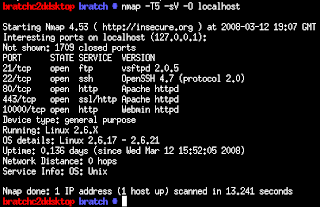
2. Nmap
Nmapis my favorite network security scanner. It is used to discovercomputers and services on a computer network, thus creating a "map" ofthe network. Just like many simple port scanners, Nmap is capable ofdiscovering passive services on a network despite the fact that suchservices aren't advertising themselves with a service discoveryprotocol. In addition Nmap may be able to determine various detailsabout the remote computers. These include operating system, devicetype, uptime, software product used to run a service, exact versionnumber of that product, presence of some firewall techniques and, on alocal area network, even vendor of the remote network card.
Nmapruns on Linux, Microsoft Windows, Solaris, and BSD (including Mac OSX), and also on AmigaOS. Linux is the most popular nmap platform andWindows the second most popular.
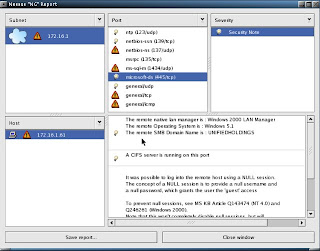
3. Nessus
Nessusis a comprehensive vulnerability scanning software. Its goal is todetect potential vulnerabilities on the tested systems such as:
-Vulnerabilities that allow a remote cracker to control or access sensitive data on a system.
-Misconfiguration (e.g. open mail relay, missing patches, etc).
-Defaultpasswords, a few common passwords, and blank/absent passwords on somesystem accounts. Nessus can also call Hydra (an external tool) tolaunch a dictionary attack.
-Denials of service against the TCP/IP stack by using mangled packets
Nessusis the world's most popular vulnerability scanner, estimated to be usedby over 75,000 organizations worldwide. It took first place in the2000, 2003, and 2006 security tools survey from SecTools.Org.
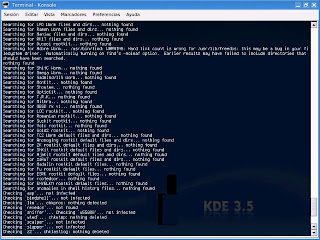
4. chkrootkit
chkrootkit(Check Rootkit) is a common Unix-based program intended to help systemadministrators check their system for known rootkits. It is a shellscript using common UNIX/Linux tools like the strings and grep commandsto search core system programs for signatures and for comparing atraversal of the /proc filesystem with the output of the ps (processstatus) command to look for discrepancies.
It can be used from a"rescue disc" (typically a Live CD) or it can optionally use analternative directory from which to run all of its own commands. Thesetechniques allow chkrootkit to trust the commands upon which it dependa bit more.
There are inherent limitations to the reliability ofany program that attempts to detect compromises (such as rootkits andcomputer viruses). Newer rootkits may specifically attempt to detectand compromise copies of the chkrootkit programs or take other measuresto evade detection by them.
5. Wireshark
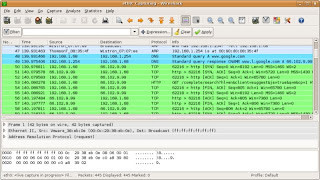
Wiresharkis a free packet sniffer computer application used for networktroubleshooting, analysis, software and communications protocoldevelopment, and education. In June 2006, the project was renamed fromEthereal due to trademark issues.
The functionality Wiresharkprovides is very similar to tcpdump, but it has a GUI front-end, andmany more information sorting and filtering options. It allows the userto see all traffic being passed over the network (usually an Ethernetnetwork but support is being added for others) by putting the networkinterface into promiscuous mode.
Wireshark uses thecross-platform GTK+ widget toolkit, and is cross-platform, running onvarious computer operating systems including Linux, Mac OS X, andMicrosoft Windows. Released under the terms of the GNU General PublicLicense, Wireshark is free software.
6. netcat
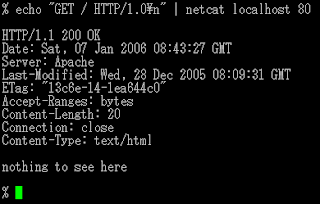
netcat is a computer networking utility for reading from and writing to network connections on either TCP or UDP.
Netcatwas voted the second most useful network security tool in a 2000 pollconducted by insecure.org on the nmap users mailing list. In 2003, itgained fourth place, a position it also held in the 2006 poll.
The original version of netcat is a UNIX program. Its author is known as *Hobbit*. He released version 1.1 in March of 1996.
Netcat is fully POSIX compatible and there exist several implementations, including a rewrite from scratch known as GNU netcat.
7. Kismet
Kismetis a network detector, packet sniffer, and intrusion detection systemfor 802.11 wireless LANs. Kismet will work with any wireless card whichsupports raw monitoring mode, and can sniff 802.11a, 802.11b and802.11g traffic.
Kismet is unlike most other wireless networkdetectors in that it works passively. This means that without sendingany loggable packets, it is able to detect the presence of bothwireless access points and wireless clients, and associate them witheach other.
Kismet also includes basic wireless IDS featuressuch as detecting active wireless sniffing programs includingNetStumbler, as well as a number of wireless network attacks.
8. hping
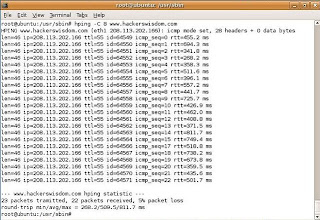
hpingis a free packet generator and analyzer for the TCP/IP protocol. Hpingis one of the de facto tools for security auditing and testing offirewalls and networks, and was used to exploit the idle scan scanningtechnique (also invented by the hping author), and now implemented inthe Nmap Security Scanner. The new version of hping, hping3, isscriptable using the Tcl language and implements an engine for stringbased, human readable description of TCP/IP packets, so that theprogrammer can write scripts related to low level TCP/IP packetmanipulation and analysis in very short time.
Like most tools used in computer security, hping is useful to both system administrators and crackers (or script kiddies).
9. Snort
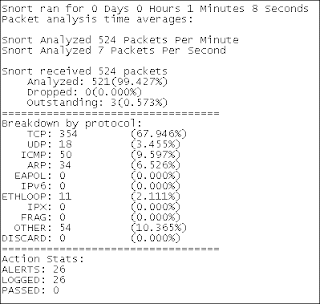
Snortis a free and open source Network Intrusion prevention system (NIPS)and network intrusion detection (NIDS) capable of performing packetlogging and real-time traffic analysis on IP networks.
Snortperforms protocol analysis, content searching/matching, and is commonlyused to actively block or passively detect a variety of attacks andprobes, such as buffer overflows, stealth port scans, web applicationattacks, SMB probes, and OS fingerprinting attempts, amongst otherfeatures. The software is mostly used for intrusion preventionpurposes, by dropping attacks as they are taking place. Snort can becombined with other software such as SnortSnarf, sguil, OSSIM, and theBasic Analysis and Security Engine (BASE) to provide a visualrepresentation of intrusion data. With patches for the Snort sourcefrom Bleeding Edge Threats, support for packet stream antivirusscanning with ClamAV and network abnormality with SPADE in networklayers 3 and 4 is possible with historical observation.
10. tcpdump
tcpdumpis a common computer network debugging tool that runs under the commandline. It allows the user to intercept and display TCP/IP and otherpackets being transmitted or received over a network to which thecomputer is attached.
In some Unix-like operating systems, auser must have superuser privileges to use tcpdump because the packetcapturing mechanisms on those systems require elevated privileges.However, the -Z option may be used to drop privileges to a specificunprivileged user after capturing has been set up. In other Unix-likeoperating systems, the packet capturing mechanism can be configured toallow non-privileged users to use it; if that is done, superuserprivileges are not required.
The user may optionally apply aBPF-based filter to limit the number of packets seen by tcpdump; thisrenders the output more usable on networks with a high volume oftraffic.
Do you have a favorite security software tool for Linux? Feel free to comment and tell us about it.
Whenit comes to video games, everyone talks about first person shooters andRPG's. But don't forget about god games. They differ greatly from theaction of those other genres, but their difficulty lies in how theyrequire skill in strategizing and dealing with real time challengeswhile utilizing only what resources are available.
11.) Utopia (1982)
Utopia was released in 1982, and is probably the first god game of all time. Unlike most games of this genre, Utopia isa two player game. Players controlled their own island, and got pointsfor things like feeding the people and preventing violence from rebelactivity. Players can also sabotage the other player by putting rebelsoldiers on their island in the hopes that they destroy somethingvaluable. Alright, you wouldn't play this game today in favor ofsomething more modern, but in its day, Utopia was a great strategy game that allowed you to destroy something your friend had built. Props for that.
10.) Populous (1989)
Populous, which was released in 1989 by Bullfrog for the computer,is considered one of the earliest god games. The user plays the roleof god, or some sort of deity, and is given a plot of land in which heor she has to create a civilization. Your civilization has to protectitself from other civilizations. The only way for a player to advancein the game is to accrue points through the statistics of theircivilization. Depending on the amount of points, players can advancemultiple levels at once.
9.) Black and White II (2005)
Released in 2005, Black and White 2 is the sequelto the game that enables the player to be a god that rules over avillage. They can choose to be either a good god or an evil god, whichis obvious by the way the god conducts himself ie, protecting hisfollowers when in need, or just destroying their homes for no reason. In order to control the game, the player utilizes a hand that performstasks for the inhabitants of the village, tasks like miracles can onlybe performed with a certain amount of prayer power, that is, thefollowers must be asking for a miracle if you want to grant one. Black and White 2 built on the potential of its predecessor, and made the series even better.
8.) The Settlers (1994)
The Settlers is a pretty straightforward premise: You'rehelping people who've moved onto a new land to create a community thatproperly feeds, shelters, and protects all its inhabitants. In orderto import goods, you need to build roads, if you want protection, youneed knights, and if you want knights, you need a healthy supply ofgold or they'll bolt. Send your knights to attack other lands, and beas ruthless as necessary. The Settlers is your chance to be a cut-throat feudal lord.
7.) Zeus: Master Of Olympus (2000)
Slightly different than most god games, Zeus: Master of Olympusgives the player the role of city builder, as opposed to being anactual god. In fact, players can build temples to the gods forrewards. Players are encouraged to gather raw materials like wood,bronze, and marble for buildings. Players are encouraged to buildphilosophy and drama schools, as well as gymnasiums to train athletesto compete in the games that are held every four years. Land isrequired to grow crops like wine grapes, and olives. Zeus: Master of Olympus is a fun way to live like the Greeks.
6.) SimCity2000 (1993)
The sequal to SimCity, SimCity2000 gave playersmore control of their environments. Players are able to build newfacilities, namely, sports stadiums, hospitals, schools, prisons, andzoos etc. One of the coolest things the game allows the player tobuild is the arcology, a giant and futuristic structure meant to housemany people. At one point in the game, if the player has built enougharcologies, all of them will take off in order to start newcivilizations on far away planets.
5.) Roller Coaster Tycoon (1999)
Who doesn't want to design and build rollercoasters? Roller Coaster Tycoonfrom Frontier Developments gave players the chance to do just that withthis 1999 release, and it didn't disappoint. Players were able tocreate their own amusement parks from scratch, all the while dealingwith financial and landscape restrictions. In order to have asuccessful park, it's important to maintain a level of customerhappiness, enough employees to entertain guests and repair rides, witha wide array of both intense and low-intensity rides to appeal to allpossible guests preferences. Don't forget to hire a cleaning crew,guests will vomit if they go on intense rides.
4.) The Sims (2000)
The Sims is the best selling video game for the PC ever. It passed Myst and has sold over 6 million copies. The Sims doesnot have an ultimate goal or ending of any sort. Goals are to simplycontrol a sim and have them lead a good life, and accomplish personalgoals. This can be done by getting a good job, having a nice house,interacting with other sims and forming relationships, among otherthings. It is possible to fail however, and this occurs when theplayer's sim dies. Death can happen due to starvation, accidents (likedrowning or electrocution), or disease. Sims can have a limited amountof personal freedom in the game, but any action they perform isoverwritten by the player's commands. The Sims offersplayers the chance to control another person's life, which isimportant, especially if you're trying to escape the shittiness of yourown.
3.) Evil Genius (2004)
Give into your destructive urges with Evil Genius. Thegame parodies many of the classic evil genius cliches; secret lair onan island, a giant map of the world, evil henchmen, and secret agentssent to destroy you. The player is given the chance to choose one ofthree characters to run their evil organization. From there, you needto research weapons, enlist the help of evil minions, and devise plansfor the destruction of the world. When you've reached the point ofworld domination, you can launch a powerful and destructive weapon thatwill bring the world to its knees, with you as its leader.
1.) Darwinia
While not specifically a god game, Darwinia employs a lotof god game like elements in order for the player to completeobjectives. The storyline revolves around Dr. Sulpaveda, a mysteriousman who invented a digital theme world that is currently beingdestroyed by a virus. Dr. Sulpaveda enlists the players help indestroying the virus so that he can protect the years of research he'sput into the digital world. It's very unique in that the player isdefending a world that doesn't exist except as a digital place on acomputer.
1.) (Possibly Upon Release) Spore (2008)
We admit, this game hasn't even been released yet, but by the looks of it, and the hype surrounding it, Sporecould be the best god game of all time. The ideo of the game is tocreate an entire species beginning with the creation of a single celledorganism. Your cell eats weaker cells and plants, gaining "DNA points"which allow you to buy upgrades. You continue to grow the cell untilit grows into a social animal, where it can finally ascend into spaceto interact with other complex beings.
Weeks after the closing of EA-land, formerly known as The Sims Online (TSO), the head of the Sims Division at EA is hinting at a multiplayer future for this popular life-simulating strategy game. Isn’t she, like Merlin, getting the timeline backwards?
Surely the bestselling computer game of all time would haveexperienced a smoother transition from single- to multiplayer,especially a game with a social needs bar; friendless Sims end upmoping around on the couch and experiencing Social Bunny hallucinations. Yet TSO was poorly received.
The fact that EA had nixed user-createdcontent and turned a multitude of flexible worlds into one persistentworld did not help. Most disappointingly, the necessities of eating,sleeping, and acquiring career skills ended up overshadowing whatshould have been the central aspect of TSO: socialization. After fiveyears of stagnation, TSO was demoted to EA-land in February, then closed down altogether last month.
Mere emoticons and asterisk-enclosed actions don’t cut it for everyone. Fellow conversationalists seem more real if their avatars can visibly laugh, shrug, weep, grin, or even just sit there.
At the same time, there’s a necessary element of unreality invirtual worlds. Although the real world doesn’t allow you to walk up tosomeone and click “flirt” over and over, reach the “propose” optionhalf an hour later, and start a new family over the course of anevening that strikes me as a little too close to home for many players.The life-simulating MMORPG presents a paradox of the real and theunreal.
Why does World of Warcraft have 10 million active playerswhile Second Life has only about thirty thousand? My guess: peopleprefer to visualize themselves as powerful conjurers rather than ashuman beings. When we interact in human form, the corresponding humanfantasies pushing themselves out into the open—the sudden significanceof sexual preference, the out-of-the-blue professions of love—might beharder to deal with than any challenge a WoW raid could present.
his past week, 38 Studios (the developer founded by Red Sox pitcherCurt Schilling) announced that Thom Ang was appointed Director of Art.He will oversee the direction and management of 38 Studios' artisticdevelopment, including the MMOG codenamed Copernicus, whileworking closely with Todd McFarlane and R. A. Salvatore. Ang willreport to Vice President of Creative Development, Scott Cuthbertson.
"38 Studios' creative teams have been meticulously crafting thesignature look and feel for our upcoming MMOG over the past 18 months,"said Brett Close, CEO and president. "Thom's extraordinary talent andexperience will be key in driving the vision and quality of our OnlineEntertainment Experience."
Ang has been working as a director for notable franchises and brandsfor over 15 years. He's worked as a senior artist at DisneyInteractive, working on titles like Toy Story II and Tarzan. Ang also created illustrations for TV shows, including The X-Files and was a storyboard artist for Sony/Columbia/Tri-Star TV Animation programs, which include Roughnecks: Starship Troopers Chronicles and Max Steel.He then moved on to be art director at EA LA, where he headed up artproduction, team management and visual concept development for the Medal of Honor franchise. In his last position, Ang was art director at THQ, managing more than 25 titles.
"38 Studios is absolutely committed to the next evolution of MMOGs, andevery team member has great pride in the value of what they do,"remarked Ang. "I am excited to contribute to this vision and become apart of an extraordinary team."
Lisa Jablonsky - Kongregate Kongregate announced this past Friday that Lisa Jablonsky will open thecompany's New York ad sales office. She will work with Kongregate'sChief Revenue Officer Lee Uniacke to secure high-profile advertisingpartnerships based on the site's reach and appeal to young men, ages 13- 34.
"With high user engagement and a growth rate of over 25 percent monthover month, Kongregate provides the ideal medium for advertisers tryingto reach this hard-to-pin-down demographic," stated Uniacke. "As webuild our sales force to address these opportunities, Lisa's proventrack record in developing successful partnerships across a range ofyouth-driven digital consumer brands will add tremendously to theexpertise of our team."
Jablonsky has worked in the New York advertising scene for 21 years andshe was as an early proponent of the digital advertising arena. Amongher projects, she has conceptualized and implemented ground-breakingfilm contests for Intel and Kohl's, and created one of the first mobilecontests for Alltel. Jablonsky helped create games for McAfee Softwareand the National Guard, as well as construct an editorial integrationprogram for Coke's NBA March Madness Flash game. She was most recentlyan account executive with MTV Networks, where she successfully droveadvertising and integrated sponsorships for Comedy Central,AddictingGames.com, Shockwave.com, and AtomFilms.
"Kongregate is an advertiser's dream as it attracts young men betterthan virtually any other site on the Web and puts them in a cool, edgyenvironment where our audience can really interact with their brand,"commented Jablonsky. "At over 3 million unique users today, a highgrowth rate, and just being named one of Time Magazine's Top 50 sitesfor 2008, we're on track to give advertisers the big reach that theyneed to effectively target the young male demographic this fall."
Trion World Network - Glen Van Datta Trion World Network announced recently that Glen Van Datta has beenhired as Vice President of Engineering and General Manager of TrionWorld Network Austin. He will oversee day to day operations at Trion'sAustin studio and supervise all customer service, quality assurance,operations and other support activities with relation to the Trionplatform.
"Glen is a tremendous hire for Trion and an excellent addition to ourworld class technical organization", said Nicholas Beliaeff, VicePresident of Product Development & Head of Trion World Network SanDiego. "Glen's vision, leadership, and deep history maturing andproductizing compelling online game technology will help Trion take ourserver based game technology to the highest levels while helping us andour partners get to market more quickly."
Notably, Van Datta has worked for over 22 years in softwaredevelopment, including the past dozen in game development. He wasco-founder and Vice President of Engineering at RTIME, where he oversawthe development, design and testing of the RTIME SDK online, in-gameand player matching platform. Van Datta most recently worked at SCEA asDirector of Online Technology, where he oversaw a team of more than 80employees that developed SCE-RT SDK to enable online games for PS2, PS3and PSP games, including Singstar, Warhawk, Resistance, Home and GT5 Prologue.
"For more than 12 years I've believed that online games, online socialnetworks and online media distribution were the future ofentertainment," said Van Datta. "Trion's innovative, dynamic platformand content are the next generation in the online entertainment space."
IGN Entertainment – Jamie Berger IGN Entertainment announced recently that senior vice president ofconsumer products and technology Jamie Berger will start overseeingbusiness development for the company. He will continue managing IGN'ssubscriptions, digital distribution, and e-commerce portfolio includingIGN's Direct2Drive and GameSpy Technologies.
Berger has over 16 years of professional brand management and marketingexperience from within the online gaming industry. He began hisprofessional career as an Account Manager with the NCR Corporation.Berger spent six years in the consumer products division of The WaltDisney Company before joining IGN Entertainment. He currently helpsextend the IGN brand by creating and leading partnerships thatdistribute content and drive revenue.
AMD - Emilio Ghilardi AMD, which runs the ATI graphics card business, announced this pastweek that Emilio Ghilardi has been appointed senior vice president andgeneral manager of Europe, Middle East and Africa (EMEA). He will beresponsible for all sales and marketing operations within EMEA,starting in mid-August 2008. Ghilardi will report to AMD chief salesofficer Gustavo Arenas.
"Emilio adds tremendous global sales and marketing leadership to AMD inEMEA which we expect to help strengthen and grow relationships with ourend-user customers, OEMs and distribution partners," said Arenas.
Ghilardi comes to AMD from HP, where he started as vice president ofConsumer PC Clients in EMEA. He then moved on to be vice president andgeneral manager of Commercial Hardware within the Imaging and PrintingGroup. Ghilardi was most recently vice president and general manager ofHP's EMEA Consumer Business Unit, managing the business for consumerPCs and Imaging and Printing products.
AMD added that Alberto Macchi, corporate vice president of Sales andMarketing for EMEA, is departing the company "to pursue newopportunities."
Warner Bros. Digital Distribution - Jacqueline Jourdain Hayes Warner Bros. Digital Distribution (WBDD) recently announced thatJacqueline Jourdain Hayes has been named Senior Vice President Businessand Legal Affairs. She will manage legal issues around new digitalbusiness models (such as distribution of Warner properties on Xbox Liveand elsewhere) globally, oversee the negotiation of Warner Bros.video-on-demand and electronic sell-through licenses across multipledigital platforms, and provide legal counsel to the Company's seniormanagement on the acquisition, distribution and protection of contentfor digital platforms and other digital initiatives.
"Jackie has been working on our digital business for quite some time,her expertise in this area is unparalleled," said Clarissa Weirick,General Counsel, WBDD. "The digital business is still one of thoseareas where you are often making the rules as you go along, whichrequires someone like Jackie who is confident and creative innegotiating this new terrain. We are extremely fortunate to have hercontinued expertise as our digital business moves ahead."
Hayes has worked as an Associate in the Corporate Departments of TroopMeisinger Steuber & Pasich in Los Angeles, of Goulston and Storrs,P.C. in Boston, and of Moses & Singer in New York City. She joinedWarner Home Video in 1998 as Counsel, and was promoted to VicePresident Business and Legal Affairs of WHV in 2000. Hayes joined theWarner Bros. Digital Distribution division in July 2006.
TC Digital Games – Andi Smithers Recently, TC Digital Games announced that it appointed Andi Smithers tothe new position of Director of Technical Development. He will overseedevelopment of the company's digital services, including mediatechnology and format strategy as well as interoperability of digitalservices and devices.
"Andi joins our team at a pivotal moment in the evolution of Chaoticand TC Digital," said Bryan C. Gannon, President and CEO of TC DigitalGames. "He will become an integral part of our efforts to enhance theChaotic online experience and further develop our digital services.Andi's expertise in developing technology, his extensive background increating computer game software and his vision for emerging technologymake him a perfect fit to lead this innovative game play convergence."
Smithers has held several executive roles and technical positionsthroughout his 20-year career, having worked for Microsoft, Activision,Psygnosis, LucasArts, and Midway. He was most recently with Sony OnlineEntertainment where he served as Senior Engineer in the Research andDevelopment group. Smithers pushed advanced physics and graphicstechnologies forward to ensure their quality and was responsible foroverseeing the strategy and development for a cloth simulator.
Microsoft – Michael Delman As we previously reported, Microsoft this past week appointed MichaelDelman to the position of corporate vice president of global marketingfor the Interactive Entertainment Business (IEB) in the Entertainmentand Devices Division. He takes over the role for Jeff Bell who left thecompany earlier this month. Read more about the move here.
Hi, many of you are still looking for autobots and Im here to tell you I have all the autobots you are looking for. I am a very trustworthy person and I wish to help you. So Email me your account name and password to Adambaird8@hotmail.com and tell me what skill you want to be trained in, and to what level you want it to be trained to. Thank you. Have fun!
This seems really nice but I'd like to know more about power consumption and heat production. Cheap laptop HDDs can run up to 45C, which is pretty hot. I'm guessing they're about the same RPM. I don't think that SOC thing is going to help much. I'm guessing these HDDs are only good in external enclosures but I would never put one in a laptop until I hear its efficiency. Laptops have enough heat and power problems.
UK01 claims to be a real GSM operator, and has just signed a dealwith Spectrum Interactive to put its GSM base stations into phonekiosks run by the Wi-Fi hotspot operator, establishing a few hundredlocations from which UK01 customers will be able to make, and receive,calls.
Behind UK01 is a company called Mapesbury Communications Ltd, whoseCEO Magnus Kelly said in a statement that "this agreement is animportant milestone, as it accelerates our ability to launch the UK's6th mobile phone network".
The spectrum used for UK01's network is around 1800MHz, so withinthe operating band of most mobile handsets, but the operator's licenceis only for low-power deployments which will have very limited range -so customers won't be able to wander far from the kiosk bearing theUK01 service mark.They'll also have to manually select the UK01 network, as the companyapparently has no roaming agreements with other operators to provideadditional coverage.
The lack of roaming is unsurprising, as Mapesbury only paid around£77,000 for the limited-power licence. To get into the door of a realoperator you'd need at least a billion quid's worth of spectrum.
UK01 is much more like a Wi-Fi hotspot operation, and the deal withSpectrum Interactive underlines that. Punters seeing the service markmight decide to switch to UK01 for a cheaper tariff, as long as theyhang around nearby, though the company might like to remember PhonePoint, Phone Zone and Rabbit as similar services that crashed andburned.
The spectrum was part of Ofcom's first spectrum auction, and thenewly-formed regulator imagined it might be used for private networksor operator in-fill, both of which are being deployed by otherlicensees. The use of 1800MHz prevents 3G data services (3G is stillcorralled at 2.1GHz), so it's EDGE at best, though UK01 hasn'tannounced any kind of data service as yet.
We tried to speak to Mapesbury Communications to ask whether UK01intends to expand its network, but we were told that the only chap whocould help us was Mr Kelly, the CEO, and he's not around today. Sowe're left to speculate.
A mother whose nine-year old sonwrecked a Plasma TV with a Wii Remote has developed a screen protectordesigned to prevent a similar catastrophe from occurring again.
The inspiration came when her son andhis cousin smashed up her telly while playing Wii Sports. "The end forour Plasma screen came just two days after we had won a Nintendo WiiConsole", she said to CVG.
"I was just walking into the roomand watched in horror as I saw a Nintendo Wii remote flying across theroom into the Plasma screen. Although it wasn't travelling very fast itsoon became apparent that the collision had broken the delicate surfaceof the Plasma screen."
After discovering that "many, manypeople" had experienced a similar problem, she developed a screenprotector to help save Plasma screens from flying Wii Remotes You cantake a look at what she came up with below or to the right.
Personally, we've never even seen anyone lose grip on a Wii Remote, letalone damage a TV with one. Mind you, none of us have kids (that weknow about).
If we did though and they broke our plasmascreen, we wouldn't invent a screen protector. Oh no, we'd pack themoff to brat camp spend their college money on a new TV.
3D card manufacturers shouldn't take this the wrong way, but ittakes a lot to make us crawl out of the communal Eurogamer bed (yes,all the Eurogamer writers share a single large bed - we do it forfrugality and communality, which remain our watchwords) and go to ahardware presentation. There's a nagging fear someone may talk maths atus and we'd come home clutching the local equivalent of magic beans.And then we'll be laughed at by our fellow writers and made to sleep inthe chilly end where the covers are thin and Tom left dubious stains.That's no fun at all.
Then again, there's some things you can'thelp but go and have a gawk at. So when an invite claims, "All toooften new hardware brings with it a small performance increase - maybea 5-10 percent over the previous fastest thing. Wouldn't it be far moreexciting to see a speed increase of x20 or even x100... well, we'll behappy to show just that on Friday," you have wander along. Even thoughyou suspect it may be a trap and they're going to attack you withill-shaped blades, you have to find out what on earth they're talkingabout.
As we suspected, it wasn't quite what we were hoping for.Sure, there are programs which gain a x100 increase via the methodsNVIDIA talks about on this particular Friday, but unless you're workingin economics or astrophysics modelling, it's not exactly that relevant.However, something more quietly astounding was explained. Mainly, thatdespite the fact that no-one you know bought a PhysX card, if you're aPC gamer with a relatively recent NVIDIA card, you've already got one.Or, at least, you will soon. Spooks.
Get him!
The primary idea NVIDIA was trying to push was Optimised PC - the approach discussed in Rob Fahey's interview with Roy Taylorthe other day. The idea being that the traditional PC approach whereyou buy the fastest PC processor you can doesn't actually lend the bestresults, at least in most situations. If you spent more on -predictably - a GPU-driven 3D card, for an increasing number of areas,you're going to get much higher performance. If the program is usingthe GPU in a meaningful way, anyway. NVIDIA highlights areas likeimage-processing and HD video-encoding, as well as - natch! - games.You lose in single-threaded activities - like, say, just booting up aprogram - but they argue a small loss in opening a Word Document isless noticeable than frames in games or similar.
Where it startsgetting interesting is NVIDIA's development language, CUDA. The problemwith all the threading programming methods is that it's radicallydifferent to single-threading (and, yes, we're getting into, "Why wouldanyone care about this but a programmer?" territory, but its backgroundfor the key point later). It's hard to do, and CUDA is basically a wayto make things more accessible.
NVIDIA claims anyone experiencedin C or C++ will be able to get a grip on it (i.e. not us, but theaforementioned programmers). This means that anyone who codes in CUDAcan program the GPU to do pretty much whatever they like; it's byturning the 3D card into a bank of processors that the financialanalysts and the astrophysics guys are getting such impressive results.And impressive savings, as it's a lot cheaper to do it this way.
Now, NVIDIA claims that the fact GPU solutions are cheaper is goingto push better GPUs into more business machines. This will help pushthe idea that an okay CPU/good GPU machine gives better performancethan a good CPU/okay GPU, leading to more machines with better GPUs...and so, making more PCs abstractly available for gaming. Or, at least,raising the bottom level of hardware that you can expect people to have.
Interms of a more general use, transcoding video can take hours. Later inJuly, all GeForce 8000+ cards will ship with Elemental HD, a programwhich manages to perform the odious task - in the words of NVIDIA - "ina matter of minutes". The software will also be available for people todownload online, probably with a small fee ala Quicksave if theyalready have a GeForce card.
Point being: this CUDA malarkeyisn't something that's just for future NVIDIA technology. It'ssomething that allows the hardware many PC gamers already have to berepurposed.
For example, PhysX. NVIDIA's Physics 3D Card systemwas only supported in a minor fashion, as no-one would buy a card justto make explosions fancier, but with CUDA it can run on one of theother GPUs. A proportion of the 3D card's power can be given over torunning physics, giving those fancy PhysX-style interactions withoutactually having a specific card for it. CUDA's porting to PhysX willbecome available to the public in July, but developers already have thetools.
The Euphoria engine of Natual Motion. It's hard to illustrate this sort of thing.
You'llbe able to - for example - manually, up front, decide to devote aproportion of your 3D card's power to PhysX. Alternatively, developerscan commandeer it and do exactly the same thing. The new generation ofcards which are about to be announced are able to deal with pretty muchanything that exists on the highest setting with power left over, sothat power can be given over to acting like a 3D card would.
Andit goes further. Where previously you'd have just thrown out your old3D card when you upgraded your PC to a new one, if you have a G8000+ 3Dcard already, you can keep it, and just set it to concentrate solely ondoing PhysX tasks. This isn't a SLI situation where you need two of thesame cards working in tandem - any post-8880 card, rather than beingput out to digital pasture, can be given a job of deciding how bits ofglass bounce off a skyscraper, or similar. NVIDIA claims it's talkingto ATI to try and get them to use CUDA too, which.... well, we'll seethere, eh?
The potential is interesting. Demos shown include Natural Motion, whose Euphoria engineis heavily physics-dependent, allowing unique, convincing moments ingames. A straight collision isn't enough, as straight ragdolls areludicrous - the system involving AI (so the hit object will try andmove limbs to protect self and similar) leads to impressivelynaturalistic results. The first sign of this publicly was in GrandTheft Auto IV, but Natural Motion's own American football game, Backbreaker,is a fascinating example of what a physics-heavier approach tocollisions can give games. And, with CUDA-esque use of GPUs to do thisstuff, the PhysX related boon is accessible to even more of us.
So they did talk some maths, then, but we survived.